THE INFECTIOUS DISEASE PHYSICIANS GUIDE TO THE SYMPTOMS, SIGNS, DIAGNOSIS AND TREATMENT OF BARTONELLA
SAMPLE BARTONELLA IMAGES
PATHOGENS JOURNAL IS AN OPEN SOUCE JOURNAL. FULL, FREE, AND COMPLETE USE IS ALLOWED WITH REFERENCING TO THIS EXCEPTIONAL PAPER. THESE ARE PICTURES PULLED FROM THE ARTICLE, NOT THE FULL PAPER. FULL REFERENCE HERE:
Breitschwerdt, E.B.; Bradley, J.M.; Maggi, R.G.; Lashnits, E.; Reicherter, P. Bartonella Associated Cutaneous Lesions (BACL) in People with Neuropsychiatric Symptoms. Pathogens 2020, 9, 1023. https://doi.org/10.3390/pathogens91210 (opens in new tab)
Figure 1.
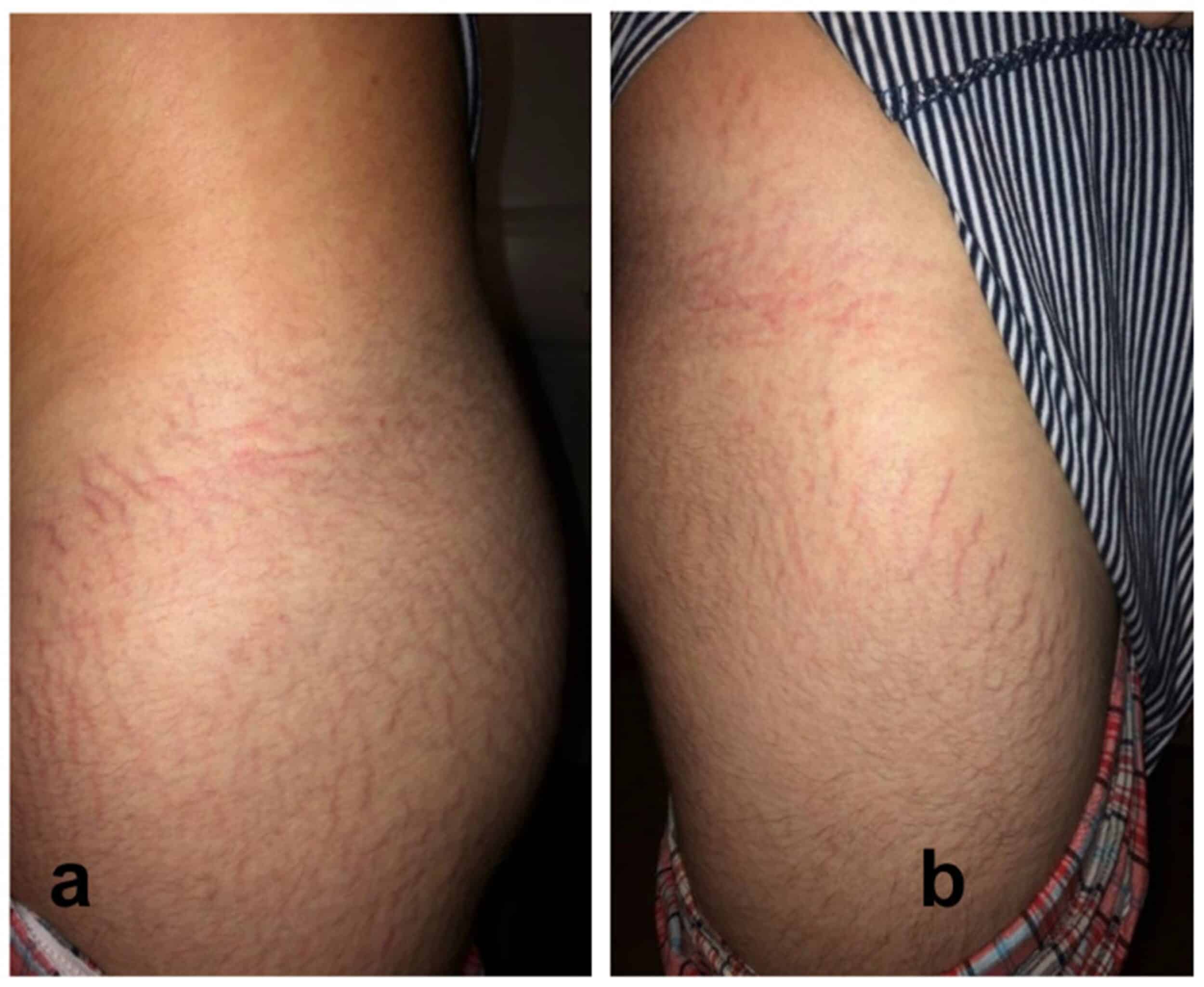
Bartonella-Associated Cutaneous Lesions. Fifteen-year-old male medically disabled student from North Carolina, with neuropsychiatric symptoms of six months’ duration. Serpiginous, vertical red lesions on the left hip and buttocks (a) and the right hip and upper thigh (b). The participant was positive for Bartonella infection by droplet digital PCR (ddPCR) enrichment blood culture (Bartonella henselae indirect fluorescent assay (IFA) serology titer 1:64). He reported no history of steroid use, bodybuilding, or rapid weight gain. Photograph of lesions provided by participant’s parents.
Pathogens. 2020 Dec 4;9(12):1023. doi: 10.3390/pathogens9121023 (opens in new tab)
Figure 2.
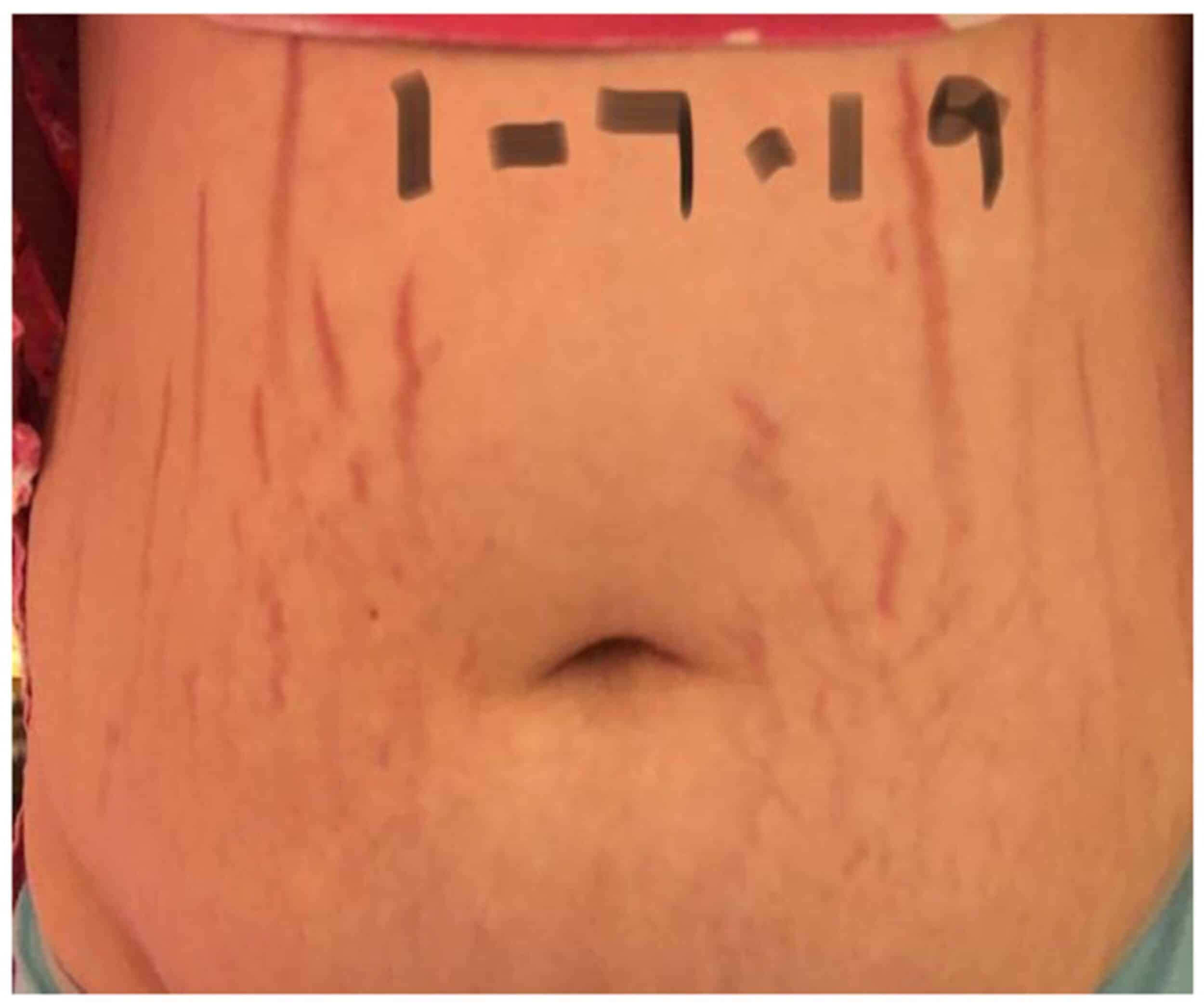
Bartonella-Associated Cutaneous Lesions. Sixteen-year-old female student from North Carolina, with neuropsychiatric symptoms of six years’ duration. Similar, but thinner and paler, but more serpiginous, vertical red lesions were photographed in November 2017. Positive for Bartonella infection by ddPCR enrichment blood culture (Bartonella henselae and Bartonella koehlerae IFA titers of 1:128 and 1:256, respectively). She reported no history of pregnancy or rapid weight gain. Photograph of abdominal lesions provided by participant’s parents.
Pathogens. 2020 Dec 4;9(12):1023. doi: 10.3390/pathogens9121023 (opens in new tab)
Figure 3.
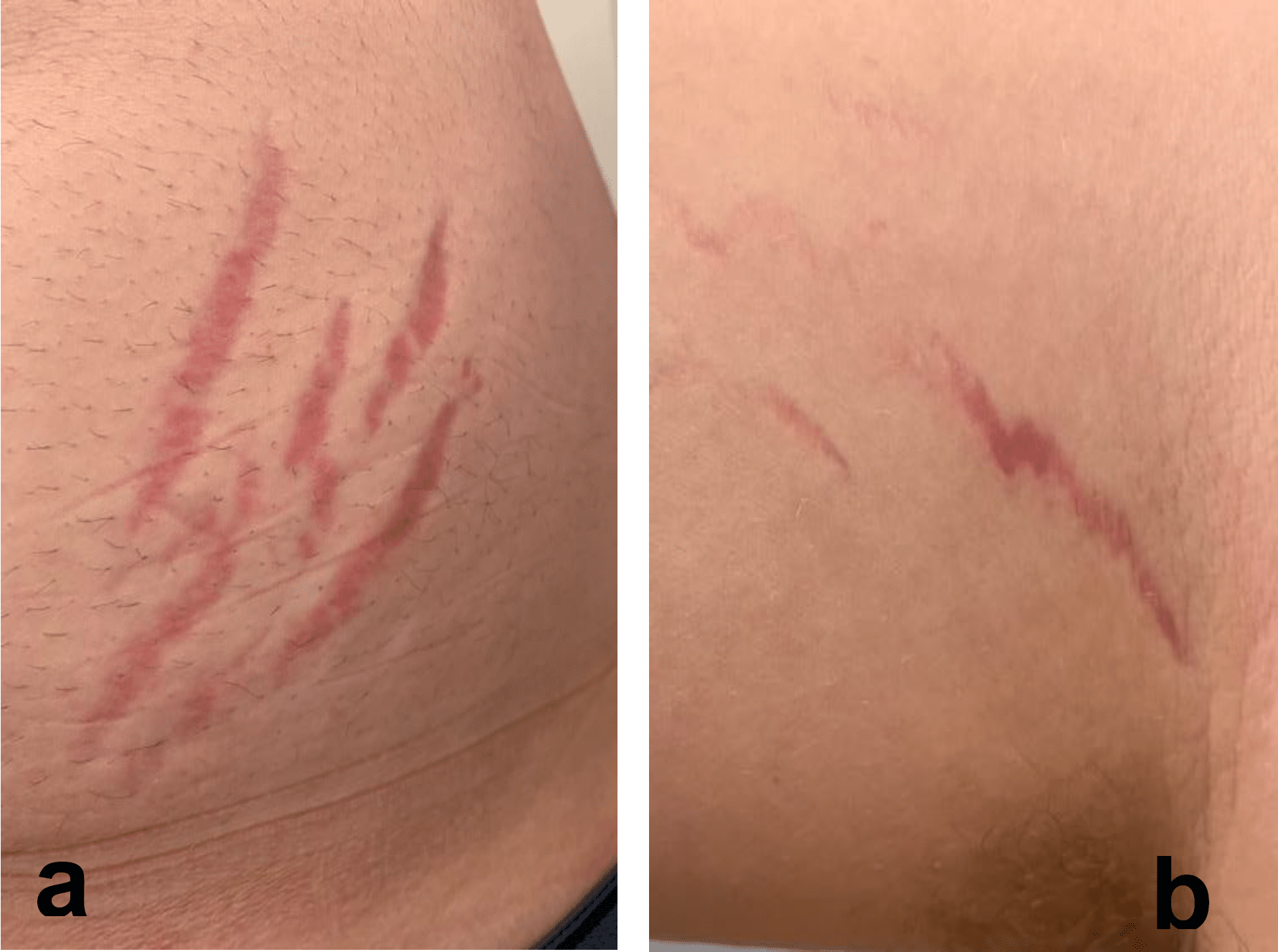
Bartonella-Associated Cutaneous Lesions. Seventeen-year-old male medically disabled student from North Carolina, with neuropsychiatric symptoms of one-year duration. Serpiginous, vertical red lesions on the left lower abdomen/upper groin (a) and the right axilla (b). Positive for Bartonella infection by ddPCR enrichment blood culture (Bartonella IFA serology-negative). He reported no history of steroid use, bodybuilding, or rapid weight gain. Photograph of lower abdomen, upper groin area and right axilla provided by participant’s parents.
Pathogens. 2020 Dec 4;9(12):1023. doi: 10.3390/pathogens9121023 (opens in new tab)
Figure 4.
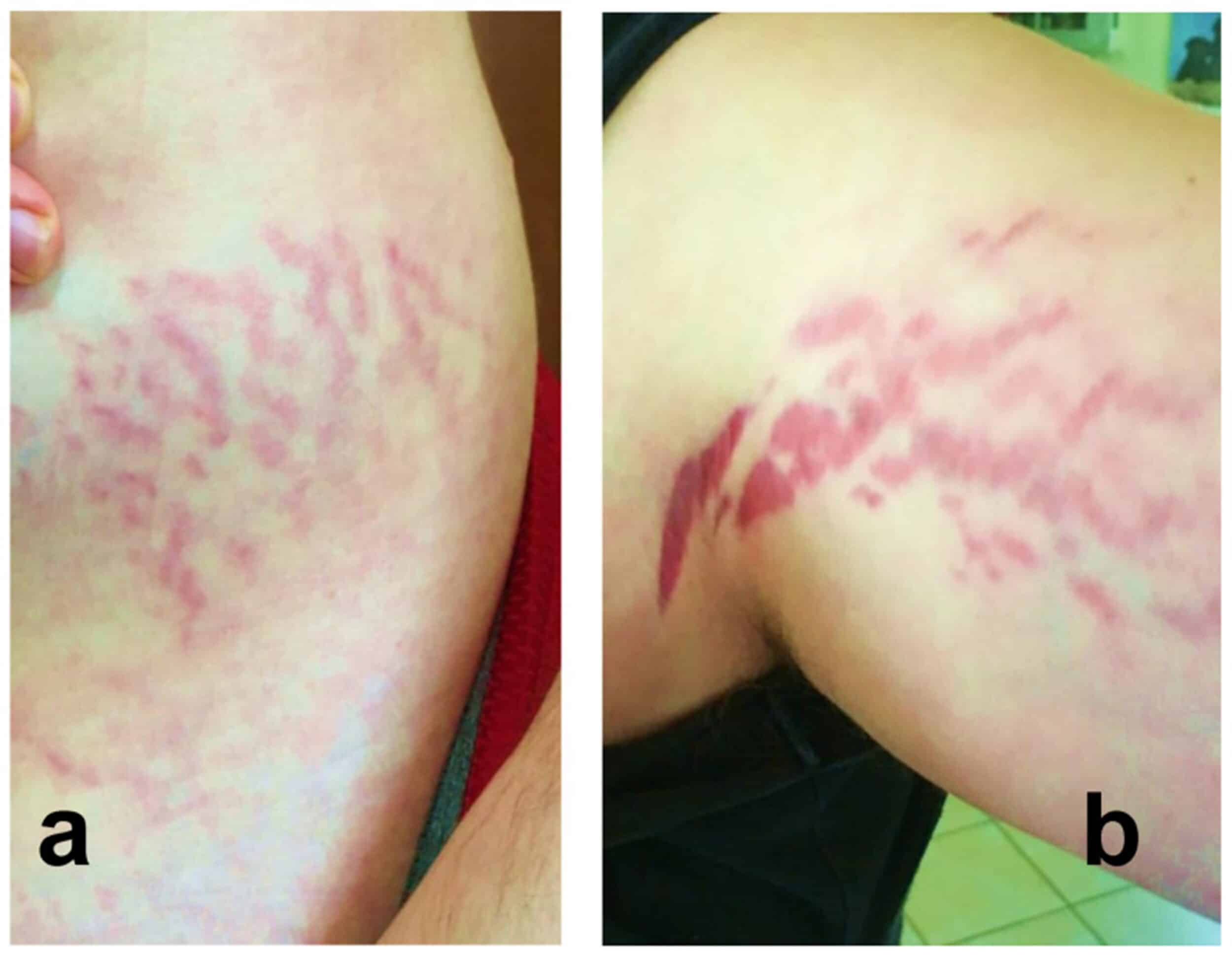
Bartonella-Associated Cutaneous Lesions. Twenty-year-old male medically disabled student from Virginia, with neuropsychiatric symptoms of four years’ duration. Serpiginous, vertical red lesions on the left hip (a) and on the left axilla (b). Positive for Bartonella infection by ddPCR enrichment blood culture (Bartonella IFA serology-negative). He reported no history of steroid use, bodybuilding, or rapid weight gain. Photographs of the hip and axilla provided by the study participant.
Pathogens.2020 Dec 4;9(12):1023. doi: 10.3390/pathogens9121023 (opens in new tab)
[THIS IS VIRTUALLY IDENTICAL TO THE COVER OF THE FIRST BARTONELLA BOOK, WRITTEN IN 2008, TO STIMULATE STUDY AND HYPOTHESIZE. NO NEED TO BUY. WE HAVE A GOOD TEXT COMING ON BARTONELLA.
Most of my many Bartonella patients do not have these stria-perhaps 3%.
The same is true of enlarged lymph nodes persisting over weeks-3% have this but usually in the distant past.
It is a huge error to require either for a diagnosis, Bartonella is in 60, 000 miles of body tubing and can cause vast problems.
Figure 5.
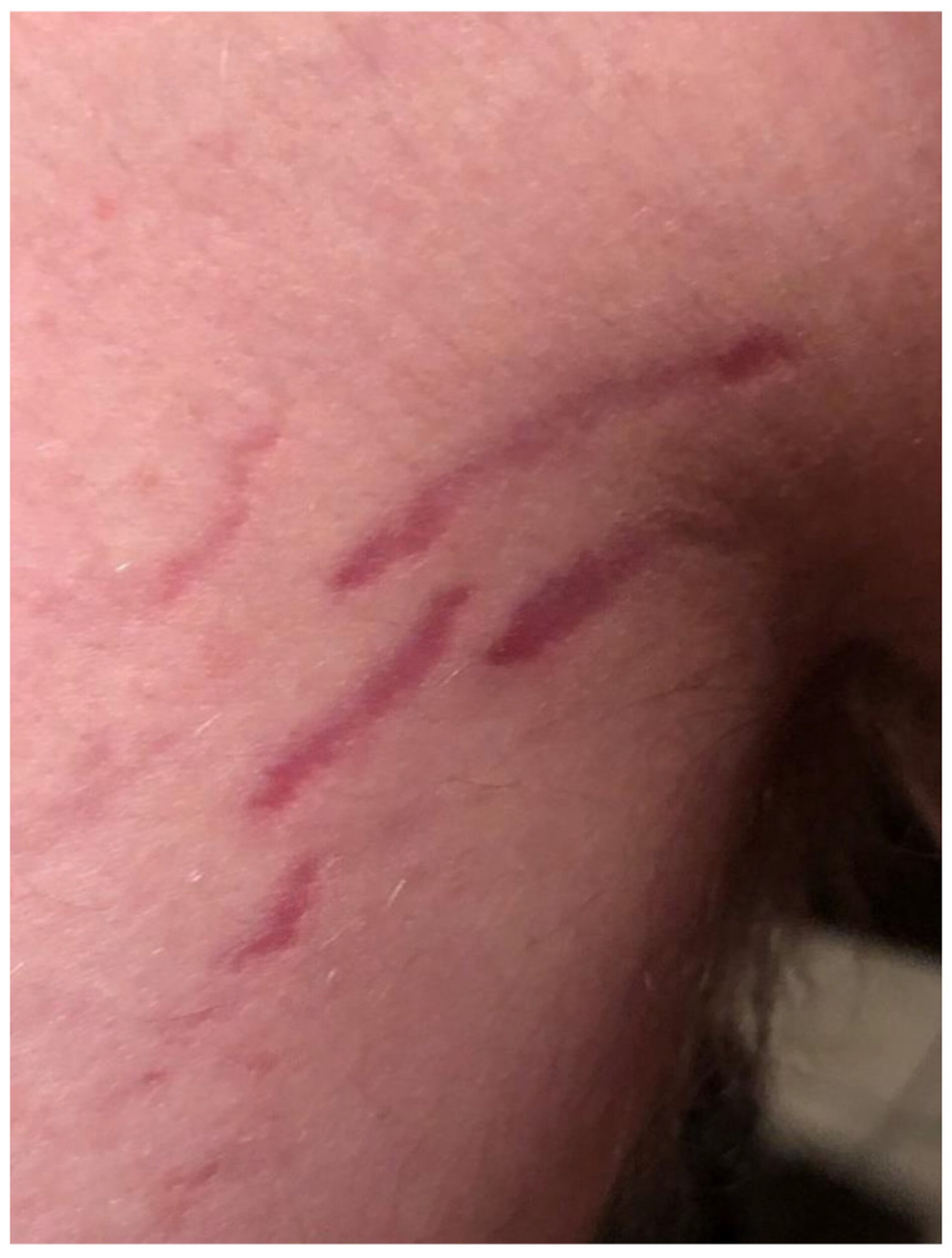
Bartonella-Associated Cutaneous Lesions. Twenty-one-year-old male landscaper from Connecticut, with neuropsychiatric symptoms of three years’ duration. Serpiginous, vertical red lesions on the right axilla. Positive for Bartonella infection by ddPCR enrichment blood culture (Bartonella henselae IFA titer 1:64). He reported no history of steroid use, bodybuilding, or rapid weight gain. Photograph of left axilla provided by the study participant.
Pathogens. 2020 Dec 4;9(12):1023. doi: 10.3390/pathogens9121023 (opens in new tab)
Figure 6.
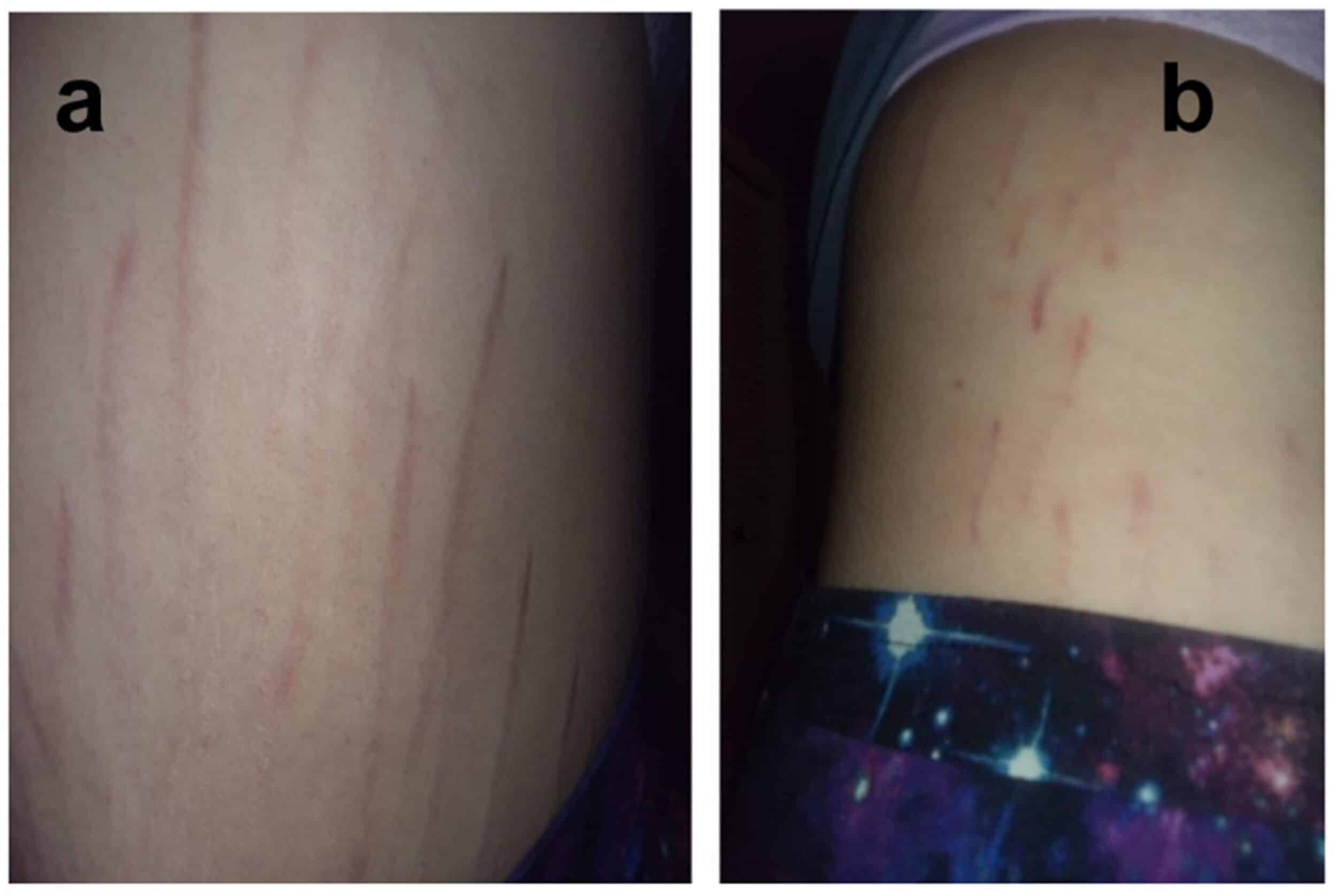
Bartonella-Associated Cutaneous Lesions. Twenty-one-year-old female veterinary assistant from Louisiana, with neuropsychiatric symptoms of 2 years’ duration. Serpiginous, vertical red lesions on the left abdomen (a) and the right upper side of the abdomen (b). Positive for Bartonella infection by ddPCR from direct EDTA blood sample and enrichment blood culture (Bartonella henselae and Bartonella koehlerae IFA titers of 1:256 and 1:64, respectively). Photo provided by the study participant.
Pathogens. 2020 Dec 4;9(12):1023. doi: 10.3390/pathogens9121023 (opens in new tab)
Figure 7.
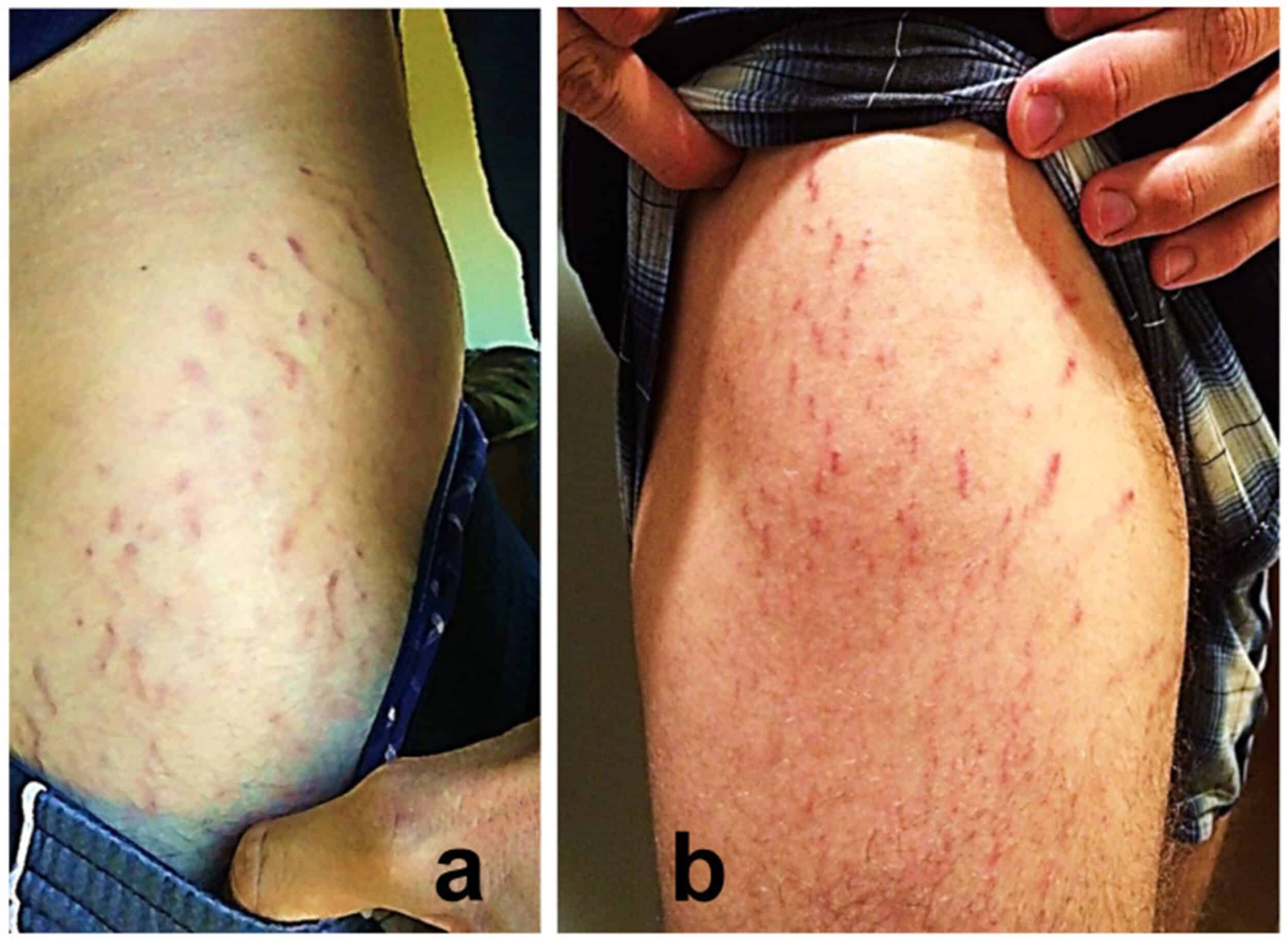
Bartonella-Associated Cutaneous Lesions. Twenty-two-year-old male medically disabled student from Minnesota, with neuropsychiatric symptoms of four years’ duration. Serpiginous, vertical red lesions on the left hip and buttocks (a) and the right upper thigh (b). Participant was positive for Bartonella infection by ddPCR enrichment blood culture (Bartonella IFA serology-negative). He reported no history of steroid use, bodybuilding, or rapid weight gain. Photographs of lesions provided by participant’s parents.
Pathogens. 2020 Dec 4;9(12):1023. doi: 10.3390/pathogens9121023 (opens in new tab)
Figure 8.
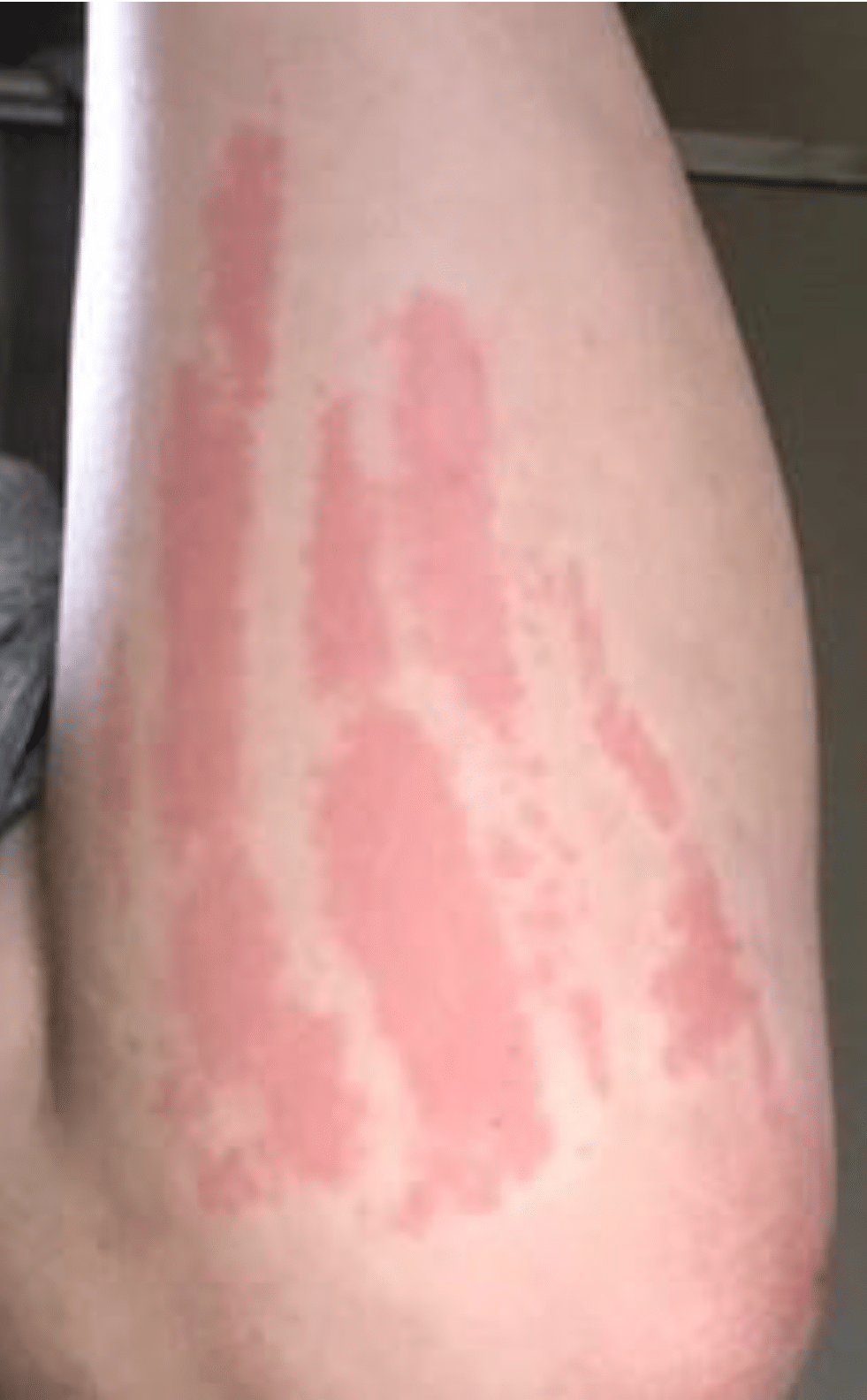
Bartonella-Associated Cutaneous Lesions. Twenty-one-year-old female medically disabled student from Mississippi, with neuropsychiatric symptoms of 13 years’ duration. Photograph of left forearm showing urticarial papules and plaques with dermatographism. Positive for Bartonella infection by ddPCR enrichment blood culture (Bartonella IFA serology-negative). Photo provided by the study participant.
Pathogens. 2020 Dec 4;9(12):1023. doi: 10.3390/pathogens9121023 (opens in new tab)
Figure 9.
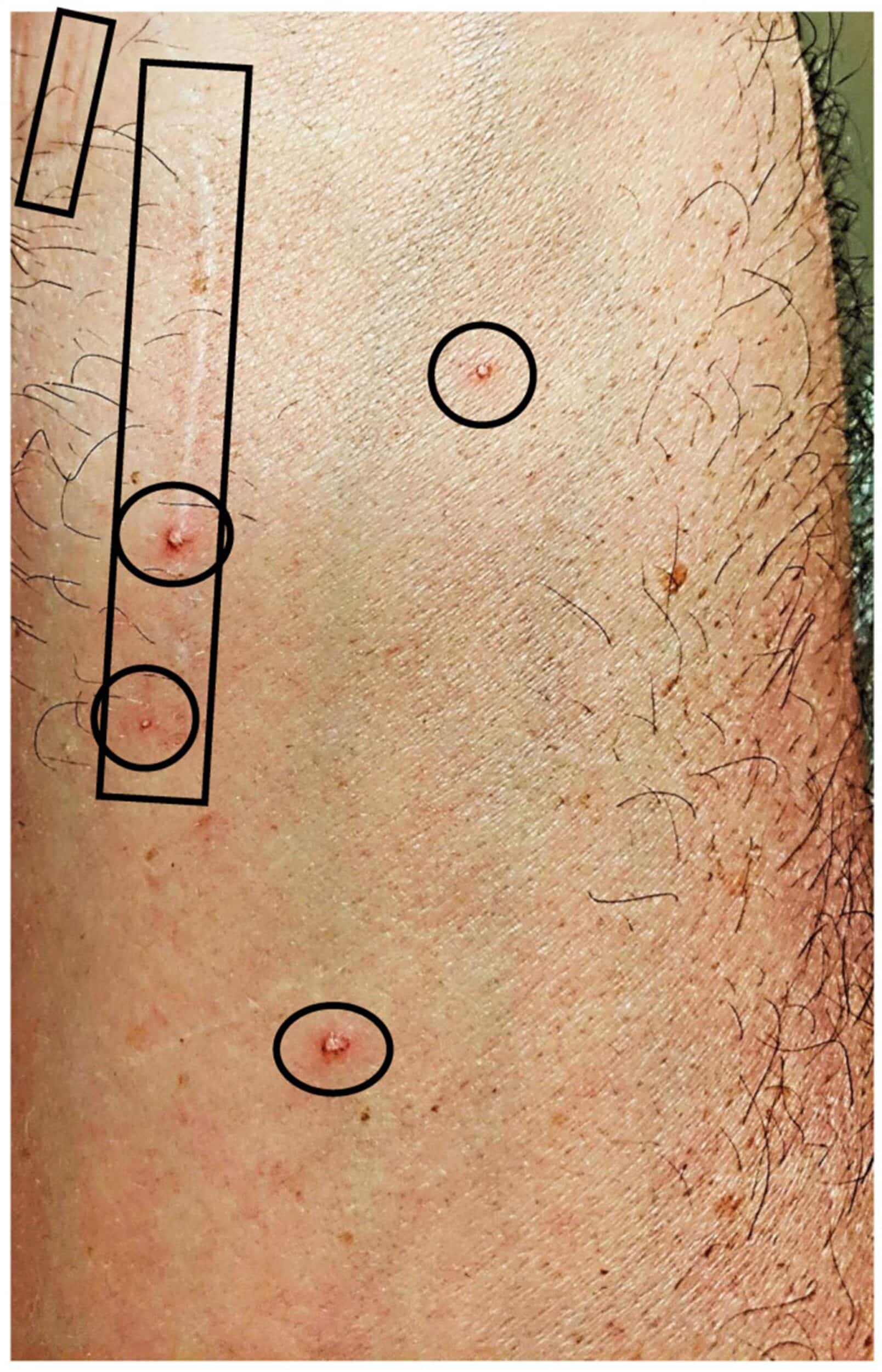
Bartonella-Associated Cutaneous Lesions. Thirty-four-year-old male veterinarian/rancher from Texas, with neuropsychiatric symptoms of six months’ duration. Photograph of forearm showing healed cat scratches (rectangles) (one year previously) and adjacent, recurrent pustular lesions (circles) that are not perifollicular. Positive for Bartonella koehlerae infection by qPCR and ddPCR (Bartonella koehlerae IFA titer 1:64). Photo provided by the study participant
SOURCE: Breitschwerdt, E.B.; Bradley, J.M.; Maggi, R.G.; Lashnits, E.; Reicherter, P. Bartonella Associated Cutaneous Lesions (BACL) in People with Neuropsychiatric Symptoms. Pathogens 2020, 9, 1023. https://doi.org/10.3390/pathogens9121023
WE HAVE MORE COMING IN OUR BARTONELLA BOOK BUT THESE AUTHORS WERE A GREAT HELP TO US.