

In a recent set of talks, infectious disease doctors were educating physicians on diagnosing Bartonella. I tried to learn from them.
As a baseline, many veteran physicians like me learned 90 seconds on this super stealth bacteria over nine years of training. I watched their “experts” lecture on Bartonella. They literally are decades out of date. Why? It is seen as trivial, just as I did decades ago.
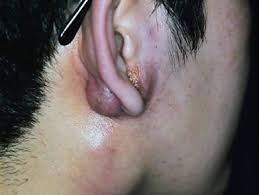
And their infectious disease specialty board is utterly barren on select emerging infections like Bartonella, Babesia, Lyme disease, TBRF, among others.
I have 12+ books on in 2026. An Ivy League board education exam course is 10 feet from me—useless information on Bartonella—good information in other areas.
STRETCH MARKS AND STRIA AND DIAGNOSING BARTONELLA
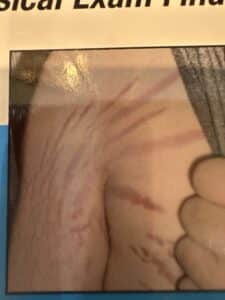
But what I describe is a surge of constant VEGF in a tissue that makes tiny blood vessels and endothelial tissue that can appear a little like stretch marks, but emerging infection experts prefer the term striae. See a picture from the front cover of the first Bartonella book of the century, which we wrote in 2008. It took many years for a very good follow-up book by anyone. We will improve our Bartonella work to write a solid 2026 textbook.
If you biopsy them, they are Bartonella and VEGF in the strae can be high while blood VEGF is normal.
MY ESTIMATION IS IF 100 PEOPLE ARE ILL IN SOME WAY FROM BARTONELLA, ONLY 3% WILL HAVE STRIAE OR ENLARGED PERSISTENT LYMPH NODES (SEE CHILD’S LARGE NODE).
I want you to know that it is NOT ROUTINE.
In 2026, we plan to reduce our 1300-page Bartonella definitive textbook to a smaller size. The only physicians who will read it have Bartonella, or their family has it, or 25% or more of their patients have the infection. Understandable. So it cannot be 1300 pages.