16% of California Samples Found to Have
New Type Of Babesia Infection
The most common form of Babesia is the microti form. Over 100 forms of Babesia exist and we have a great deal to learn about them. These are common infections that infect red blood cells and make sets of four and then explode the cells they reside in. They can cause no symptoms or cause death, and everything in between.
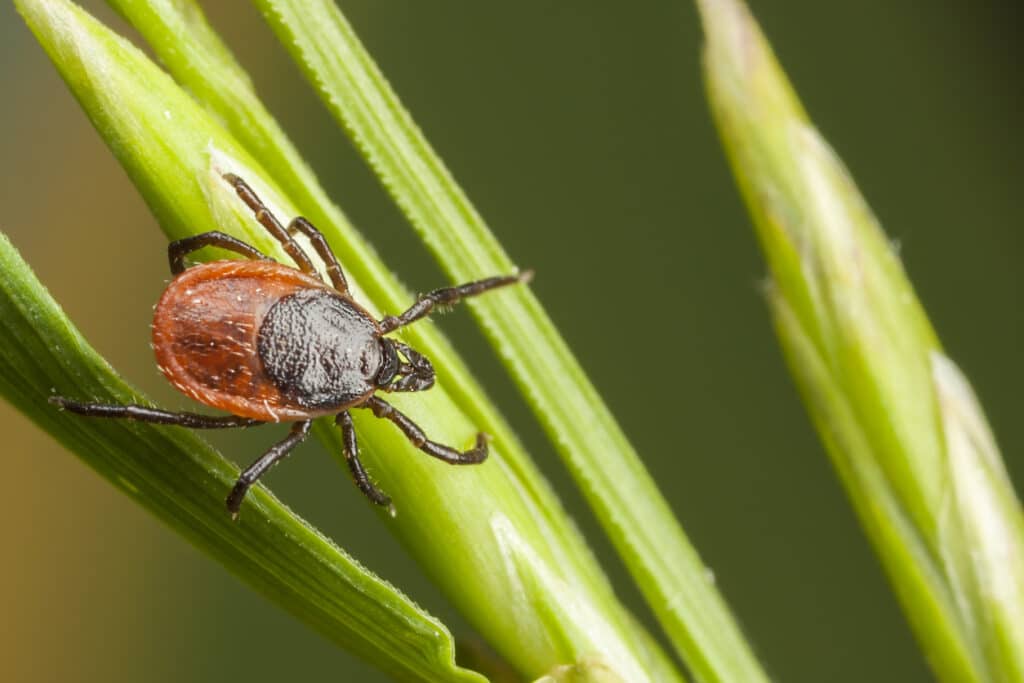
Most physicians rarely think of this infection when someone is bitten by a tick, despite the fact it was initially considered as the cause of Lyme due to its high level of frequency.
One less common form of Babesia is the WA-1 form. There are many others that used to be considered purely found in Europe that have now also been found in the US.
This very smart author found that 16% of those tested in California had antibodies to a new form of Babesia, the WA-1 form, and that it was found in a state which it was not supposed to exist in-California. WA stands for Washington State. The author seems to have a concern about the quality of the lab testing for WA-1 since 16% is so high. But with 36% of San Francisco citizens showing up as having antibodies to deer ticks saliva, I think he has found something. Also, while everyone agrees that Babesia microti is the most widely dispersed and common USA Babesia form, it is chilling and serious that so many other forms exist. How many labs are set up to test for them? How many physicians are studying this topic at pharmaceutical drug education diners to teach them?
N Engl J Med. 1995 Feb 2;332(5):298-303.
Infection with a babesia-like organism in northern California.
BACKGROUND. Human babesiosis is a tick-transmitted zoonosis associated with two protozoa...: Babesia microti (in the United States) and B. divergens (in Europe). Recently, infection with an unusual babesia-like piroplasm (designated WA1) was described in a patient from Washington State. We studied four patients in California who were identified as being infected with a similar protozoal parasite. All four patients had undergone splenectomy, three because of trauma and one because of Hodgkin's disease. Two of the patients had complicated courses, and one died. METHODS. Piroplasm-specific nuclear small-subunit ribosomal DNA was recovered from the blood of the four patients by amplification with the polymerase chain reaction. The genetic sequences were compared with those of other known piroplasm species. Indirect immunofluorescent-antibody testing of serum from the four patients and from other potentially exposed persons was performed with WA1 and babesia antigens. RESULTS. Genetic sequence analysis showed that the organisms from all four patients were nearly identical. Phylogenic analysis showed that this strain is more closely related to a known canine pathogen (B. gibsoni) and to theileria species than to some members of the genus babesia. Serum from three of the patients was reactive to WA1 but not to B. microti antigen. Serologic testing showed WA1-antibody seroprevalence rates of 16 percent (8 of 51 persons at risk) and 3.5 percent (4 of 115) in two geographically distinct areas of northern California. CONCLUSIONS. A newly identified babesia-like organism causes infections in humans in the western United States. The clinical spectrum associated with infection with this protozoan ranges from asymptomatic infection or influenza-like illness to fulminant, fatal disease.
By researchers: Persing DH, Herwaldt BL, Glaser C, Lane RS, Thomford JW, Mathiesen D, Krause PJ, Phillip DF, Conrad PA.
|