Looking at Inflammatory, Anti-Inflammatory and Other Immune Markers Associated With Lyme Disease
The only laboratory we currently use is Radiance Diagnostics. Large National Commercial Labs have never had helpful results.
Borrelia burgdorferi changes a broad network of cytokines and chemokines, and the direction and magnitude depend heavily on the tissue, stage of Lyme disease, Borrelia strain, host genetics, and whether the study measures blood, skin, synovial tissue, or cultured immune cells.
A useful way to understand it is that Borrelia can produce both strong pro-inflammatory signaling and counter-regulatory/anti-inflammatory signaling. It is not accurate to say that Borrelia simply “suppresses the immune system.”
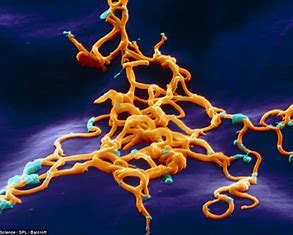
Active Lyme Disease: 2-3 Other Forms Maybe the Norm
Cytokines Most Clearly Associated With Borrelia Responses
| Cytokine | What Borrelia Can Do | General Significance |
|---|---|---|
| IL-1β | ↑ strongly induced | Major inflammatory cytokine; important in Lyme arthritis |
| IL-1α | ↑ | Pro-inflammatory/tissue inflammation |
| IL-6 | ↑ | Acute inflammation, B-cell/immune regulation |
| IL-8/CXCL8 | ↑ | Recruits neutrophils |
| TNF-α | ↑ | Strong inflammatory signaling |
| IL-10 | ↑ | Anti-inflammatory counter-regulation |
| IL-12 | ↑ | Promotes Th1 responses |
| IFN-γ | ↑ | Th1/macrophage activation; associated with inflammation |
| IL-17A | ↑ in some Lyme manifestations | Th17-associated inflammation |
| IL-17F | ↑ | Th17-associated response |
| IL-21 | ↑ | T-cell/B-cell regulation |
| IL-22 | ↑ | Barrier/Th17-associated responses |
| IL-23 | ↑ | Supports Th17 responses |
| IL-25 | ↑ in some studies | Type-2/Th17-related regulation |
| IL-27 | ↑ | Immune regulation/Th1 biology |
| IL-18 | ↑ | Promotes IFN-γ/Th1 responses |
| GM-CSF | ↑ | Myeloid-cell production/function |
| Type I IFNs (IFN-α/β) | ↑ | Antiviral-like innate signaling induced by Borrelia nucleic acids |
| Type III IFNs (IFN-λ) | ↑ | Innate epithelial/immune signaling |
A review of the Lyme immune response summarizes elevated IL-6, IL-10, TNF, IL-1β, IFN-γ and several Th17-associated cytokines—including IL-17A, IL-17F, IL-21, IL-22, IL-23, IL-25 and IL-27—in different Lyme presentations.
1. IL-1β — One of the Most Important
Borrelia can strongly induce IL-1β.
This is particularly important in Lyme arthritis.
An early human-cell study found that live B. burgdorferi preferentially induced IL-1β over IL-1α and IL-1 receptor antagonist. In that experiment, live Borrelia induced approximately six times more IL-1β protein than LPS at four hours.
Different Borrelia strains can also produce dramatically different amounts of IL-1β.
Reference:
Butler T, et al. Live Borrelia burgdorferi preferentially activate interleukin-1 beta gene expression and protein synthesis over the interleukin-1 receptor antagonist. Infection and Immunity. 1992. PMID: 1387885.
2. IL-6 ↑
IL-6 is consistently found among the inflammatory mediators induced by Borrelia.
It has been detected in:
- Borrelia-stimulated immune cells
- erythema migrans lesions
- Lyme arthritis
- blood of some Lyme patients
Human erythema migrans lesions can contain particularly prominent IL-6 expression.
Reference:
Strle K, et al. Distinct inflammatory responses to Borrelia burgdorferi in patients with erythema migrans and Lyme arthritis. [See comprehensive immune-response literature summarized in the review.]
A human clinical study also found increased serum IL-1 and IL-6 in Lyme borreliosis patients.
3. IL-8 / CXCL8 ↑
IL-8 is a major neutrophil-recruiting chemokine.
Borrelia-induced IL-8 therefore helps recruit innate immune cells toward the site of infection.
Borrelial lipoproteins and whole organisms can stimulate IL-8-associated inflammatory pathways.
Reference:
Wooten RM, et al. Borrelia burgdorferi outer surface protein A induces inflammatory mediators in human monocytes. Infection and Immunity.
The broader literature identifies IL-8 as one of the pro-inflammatory cytokines induced by B. burgdorferi.
4. TNF-α ↑
TNF-α is another major inflammatory cytokine induced by Borrelia.
It contributes to:
- endothelial activation
- leukocyte recruitment
- inflammation
- tissue injury in excessive responses
Different Borrelia strains vary substantially in their ability to induce TNF-α.
Importantly, though, one study of late-stage borreliosis patients found that their ex-vivo capacity to produce TNF-α after LPS stimulation was substantially reduced compared with controls. This illustrates why you cannot simply say “Borrelia raises TNF.” Borrelia exposure can induce TNF locally while the patient’s subsequent immune responsiveness may be altered.
Reference:
Diterich I, Härter L, Hassler D, Wendel A, Hartung T. Modulation of cytokine release in ex vivo-stimulated blood from borreliosis patients. Infection and Immunity. 2001;69(2):687-694. doi:10.1128/IAI.69.2.687-694.2001.
5. IL-10 ↑ — Particularly Important
IL-10 is the major anti-inflammatory cytokine in this discussion.
Borrelia can induce IL-10 while simultaneously inducing inflammatory cytokines such as:
- IL-1β
- IL-6
- TNF-α
In human monocytes, Borrelia lipoproteins induced both IL-10 and IL-6 through CD14-associated signaling.
In another study, Borrelia exposure produced a pattern of reduced TNF-α/IFN-γ and enhanced IL-10 compared with responses to bacterial endotoxin.
This is one reason the Borrelia immune response is complicated: the organism can provoke inflammation while the host simultaneously activates mechanisms that restrain that inflammation.
Reference:
Giambartolomei GH, Dennis VA, Lasater BL, Murthy PK, Philipp MT. Interleukin-10 anti-inflammatory response to Borrelia burgdorferi, the agent of Lyme disease: a possible role for suppressors of cytokine signaling 1 and 3. Infection and Immunity. 2002.
6. IL-12 ↑
IL-12 helps drive Th1 immune responses, including IFN-γ production.
Borrelia can induce IL-12p70.
Interestingly, asymptomatic Borrelia-seropositive people in one study had increased IL-12p70 compared with seronegative controls, suggesting that a strong Th1 response may sometimes be associated with successful resolution rather than pathology.
Reference:
Jarefors S, et al. Innate immune responses in Lyme borreliosis: enhanced tumour necrosis factor-alpha and interleukin-12 in asymptomatic individuals in response to live spirochetes. Clinical & Experimental Immunology. 2005. PMID: 15958074.
7. IFN-γ ↑
IFN-γ is a major Th1 cytokine.
Borrelia can stimulate IFN-γ, and IFN-γ is found in Lyme lesions and serum.
High IFN-γ responses can be associated with stronger inflammatory disease.
A particularly interesting study showed that IFN-γ and Borrelia act synergistically on human endothelial cells, increasing chemokines that recruit T cells.
Reference:
Wooten RM, Modur VR, McGrath JP, et al. IFN-gamma alters the response of Borrelia burgdorferi-activated endothelium to favor chronic inflammation. Journal of Immunology. 2007. PMID: 17202382.
8. IL-17A ↑
IL-17A is associated with the Th17 pathway.
Borrelia can stimulate IL-17-associated responses, and elevated IL-17A has been observed in Lyme disease research.
Th17 signaling is particularly interesting in Lyme arthritis and tissue inflammation.
The Lyme immune-response literature reports elevated IL-17A among the Th17-associated cytokines observed in Lyme disease.
Reference:
Review: Immune Response to Borrelia: Lessons from Lyme Disease Spirochetes. The review summarizes human studies of Th17-associated cytokines in Lyme disease.
9. IL-17F ↑
IL-17F is another Th17-associated cytokine.
It has been detected alongside IL-17A and other Th17 cytokines in Lyme disease investigations.
Reference:
Strle K, et al. Human Lyme disease cytokine/chemokine studies summarized in Immune Response to Borrelia: Lessons from Lyme Disease Spirochetes.
10. IL-21 ↑
IL-21 participates in T-cell and B-cell regulation and is part of the broader Th17/T-follicular helper immune network.
It has been reported among elevated cytokines in Lyme disease studies.
11. IL-22 ↑
IL-22 is involved heavily in epithelial/barrier immunity and Th17 biology.
It has also been observed in Borrelia-associated immune responses.
12. IL-23 ↑
IL-23 is important because it supports the Th17 inflammatory axis.
Borrelia-associated IL-23 responses have been reported in human Lyme disease investigations.
13. IL-18 ↑
IL-18 promotes IFN-γ production and contributes to Th1-type inflammation.
The Borrelia literature has demonstrated IL-18 induction among the inflammatory cytokines generated in response to B. burgdorferi.
14. GM-CSF ↑
Granulocyte-macrophage colony-stimulating factor can be induced by Borrelia.
GM-CSF influences production and activity of myeloid cells, including macrophage and granulocyte populations.
Reference:
The comprehensive Borrelia cytokine literature summarized in the IL-10/Borrelia review identifies GM-CSF among cytokines induced by B. burgdorferi.
15. IFN-α ↑
This is particularly interesting.
Borrelia contains nucleic acids capable of activating innate nucleic-acid sensing pathways.
Borrelia RNA can activate TLR7, producing type-I interferon responses including IFN-α.
Reference:
Miller JC, Ma Y, Criss AK, et al. Borrelia burgdorferi RNA induces type I and III interferons via Toll-like receptor 7 and contributes to production of NF-κB-dependent cytokines. Infection and Immunity. 2014. PMID: 24664510.
16. IFN-β ↑
The same innate nucleic-acid sensing system can stimulate type-I interferon signaling, including IFN-β-related pathways.
Reference:
Miller JC, et al. Infection and Immunity. 2014.
17. IFN-λ / Type III Interferons ↑
Borrelia RNA can also stimulate type III interferon, particularly IFN-λ1.
This is important because it shows that Borrelia isn’t merely recognized through classical bacterial pattern-recognition pathways; its nucleic acids can trigger interferon pathways normally associated strongly with viral recognition.
Reference:
Miller JC, et al. Borrelia burgdorferi RNA induces type I and type III interferons via Toll-like receptor 7… Infection and Immunity. 2014.
18. CCL2 / MCP-1 ↑
Strictly speaking, CCL2 is a chemokine rather than an interleukin, but it is extremely important in the Borrelia response.
It recruits monocytes/macrophages.
Elevated CCL2 has been observed in Lyme disease, particularly erythema migrans.
19. CXCL10 / IP-10 ↑
CXCL10 is strongly associated with IFN-γ signaling and recruitment of activated T cells.
Borrelia plus IFN-γ can synergistically increase CXCL10 production by endothelial cells.
20. CCL19 ↑
CCL19 is another interesting chemokine associated with Lyme disease immune responses and lymphocyte trafficking.
Elevated CCL19 has been reported in Lyme disease.
A Very Important Concept: Borrelia Does NOT Simply “Increase” or “Decrease” Cytokines
The response can look something like this:
Borrelia
↓
TLR2/CD14 and other innate sensing
↓
NF-κB activation
↓
IL-1β + IL-6 + TNF-α + IL-8
↓
inflammation/recruitment
At the same time:
Borrelia
↓
IL-10
↓
suppression/modulation of inflammatory effector functions
And:
Borrelia nucleic acid
↓
TLR7
↓
IFN-α/IFN-β/IFN-λ
↓
additional innate immune signaling
And:
IL-12
↓
IFN-γ
↓
Th1/macrophage/endothelial activation
While:
IL-23
↓
Th17 axis
↓
IL-17A/IL-17F/IL-22
That produces a mixed inflammatory + regulatory immune environment, rather than a simple immune “on/off” state.
One Particularly Important Finding
Different Borrelia strains can induce substantially different cytokine responses.
In a study comparing 29 B. burgdorferi sensu stricto isolates, researchers measured 22 cytokines and chemokines, including IL-1β, IL-6, IL-8, IL-10, TNF, GM-CSF, IL-12, IFN-γ, IL-17A/F, IL-21, IL-22, IL-23, IL-25 and IL-27. The strains differed in inflammatory potential.
That is important when interpreting blood cytokine tests: there isn’t one universal “Lyme cytokine profile.”

The major cytokines I’d pay the most attention to scientifically are:
IL-1β → IL-6 → TNF-α → IL-10 → IL-12 → IFN-γ → IL-17A/IL-17F → IL-23 → IL-22 → type I/III interferons.
And for the chemokines:
IL-8/CXCL8 → CCL2 → CCL19 → CXCL9 → CXCL10 → CXCL11.
If your interest is persistent Lyme/Borrelia, the next layer gets particularly interesting: which cytokines are associated with Borrelia persistence, Lyme arthritis, neuroborreliosis, post-treatment symptoms, and immune evasion—and which ones are potentially protective rather than harmful.